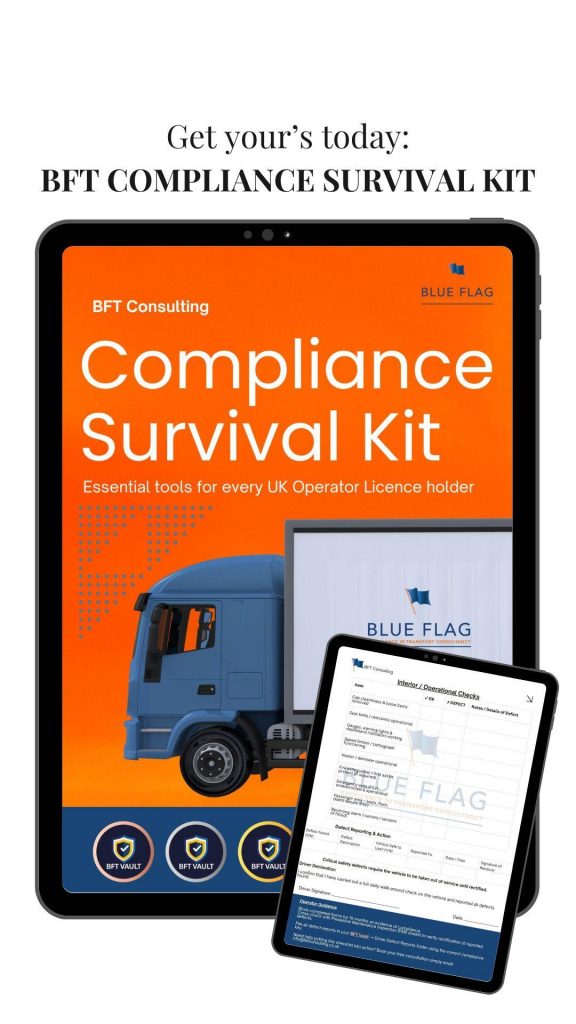
Holding an operator licence in the UK is both a privilege and a responsibility. Every licence holder—whether operating under a restricted operators licence, standard national licence, or international licence—is legally bound to follow the conditions set by the...
Holding an operator licence in the UK is a privilege, not a right. With that privilege comes strict responsibilities to the Traffic Commissioner. If an operator fails to meet those responsibilities, it can lead to a Public Inquiry—something every transport business...
In the world of UK transport, staying compliant is not optional—it’s essential. A compliance audit can feel intimidating, but with the right preparation and mindset, it becomes an opportunity to show that your business is professional, responsible, and committed to...
Starting or running a transport business in the UK often comes with the same question: What type of operator licence do I need? For many small companies or owner-drivers, the restricted operators licence seems like the most practical choice. But is it the right one...
Running a business as a single-vehicle operator has its advantages. You have fewer costs than large fleets, and you can stay flexible in your operations. However, when it comes to applying for an operator licence, you still need to prove financial standing. Many small...
Running a transport business is demanding. Between maintaining vehicles, managing drivers, and keeping clients happy, paperwork often feels like an unwanted chore. Yet, record-keeping is a legal requirement for anyone holding an operator licence in the UK. Done right,...