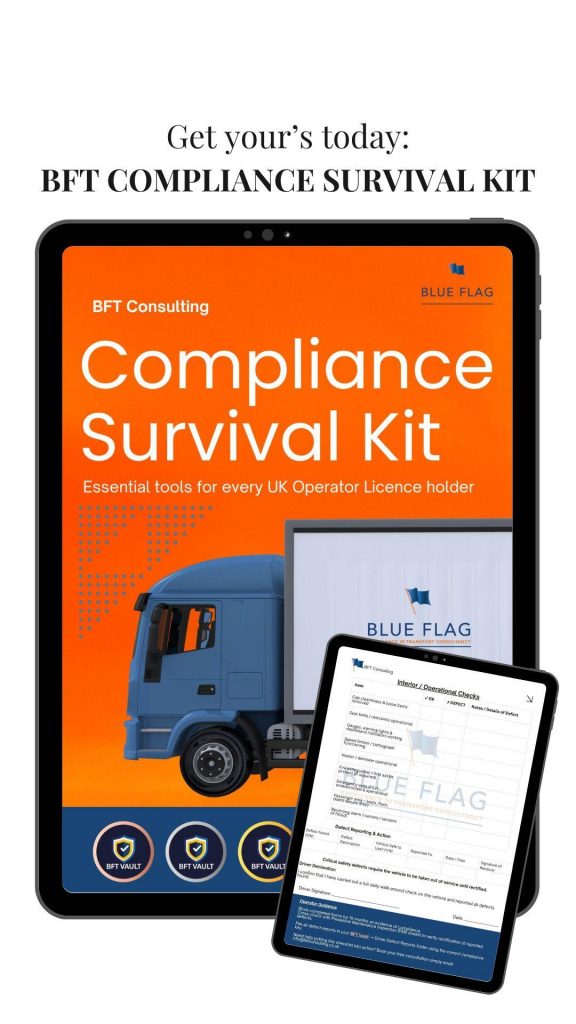
An operator licence audit is a formal check to confirm you’re following the rules set by the Traffic Commissioner. Whether you’ve just been granted your licence or have been operating for years, the audit tests how well you’re meeting your legal obligations.
Failing an audit can lead to warnings, licence curtailment or even revocation. Passing it shows you’re in full control of your operation. Here’s how to get it right.

Understand What the Audit Covers
Audits are usually carried out by DVSA officers or a third-party auditor approved by the Office of the Traffic Commissioner. They review how well your systems are working and whether you’re keeping proper records.
They’ll focus on:
-
Vehicle maintenance and safety inspection records
-
Driver hours and tachograph compliance
-
Operator licence conditions
-
Financial standing
-
Transport Manager involvement
-
Driver training and management
You may be audited at short notice, especially if you’ve had a complaint, accident or received a warning. But many audits are planned and give you time to prepare.
Check Your Maintenance Systems
You must be able to prove every vehicle is maintained safely and on time. Make sure your records show:
-
Pre-use walkaround checks are completed and signed off
-
Safety inspections are happening at fixed intervals
-
Repairs are completed quickly
-
Brake testing is being carried out at least every 3 months
-
All records are kept for at least 15 months
Your maintenance provider should be reliable and work to agreed schedules. Any missed inspections, gaps in records or repeat defects will raise concerns.
Review Your Tachograph and Hours Data
Drivers’ hours are one of the biggest causes of audit failure. If your audit finds missing data, ignored infringements or no system in place to monitor hours, you’ll be marked down.
You must be:
-
Downloading tachograph data within legal timeframes
-
Using analysis software to spot problems
-
Following up on driver infringements with written reports
-
Training drivers on how to use tachographs correctly
Have printed reports ready and show that you’re checking and acting on what they show.
Check Your Transport Manager is Involved
If you have a Standard licence, your Transport Manager must show “continuous and effective control.” That means they’re actively managing the fleet and can explain how things are run.
The auditor will want to meet them, see their work, and check that their time and involvement matches the size of your operation. They should be present during the audit and able to answer questions confidently.
Know Your Licence Conditions and Undertakings
Your licence includes legal promises—called undertakings. You agree to keep vehicles safe, records accurate, drivers legal, and the Traffic Commissioner informed of any changes.
You must notify the Office of:
-
Changes in company name or directors
-
Changes in your operating centre
-
If your Transport Manager resigns
-
If your business stops trading
Make sure all your licence documents are up to date. Any incorrect or outdated info can count against you.
Prove Your Financial Standing
You must show you still meet the financial standing level for your licence. This means holding a minimum amount of money, based on the number of vehicles on your licence.
Provide a bank statement or accountant’s letter showing funds are available. If you’re below the limit, the auditor will report it and the Traffic Commissioner could take action.
Prepare Your Drivers
Auditors often speak to drivers during site visits. Your drivers must know:
-
How to do daily checks
-
What to do with defects
-
How to use a tachograph
-
How to avoid hours infringements
They should also know where defect books are stored and how to report issues.
If drivers give the wrong answers, it suggests poor training or weak management.
Keep Your Records Organised
Presenting a tidy system shows control. Use folders—paper or digital—to separate vehicle files, driver files, training records and compliance documents.
Have a printed vehicle list that matches your licence. Make sure all expiry dates (MOT, insurance, inspections) are clearly logged and up to date.
The more organised you are, the smoother the audit will go.
What Happens After the Audit
You’ll receive a report. If everything checks out, that’s the end of it. If there are weaknesses, you may be asked to improve them or provide more evidence.
In serious cases, the Traffic Commissioner may call you to a public inquiry. This is your chance to explain what went wrong and how you’ve fixed it. But if you fail to act, your licence could be revoked.
Blue Flag Transport Consulting Helps You Prepare
Blue Flag can carry out a mock audit, review your systems, and fix any gaps before the DVSA arrives. They’ll help you:
-
Organise maintenance and compliance records
-
Check financial standing documents
-
Train staff and prepare drivers
-
Support your Transport Manager with CPC duties
They’ve helped hundreds of operators avoid penalties and keep their licences running smoothly.
Contact Blue Flag Transport Consulting if you have an audit scheduled or want to check your compliance before issues arise.