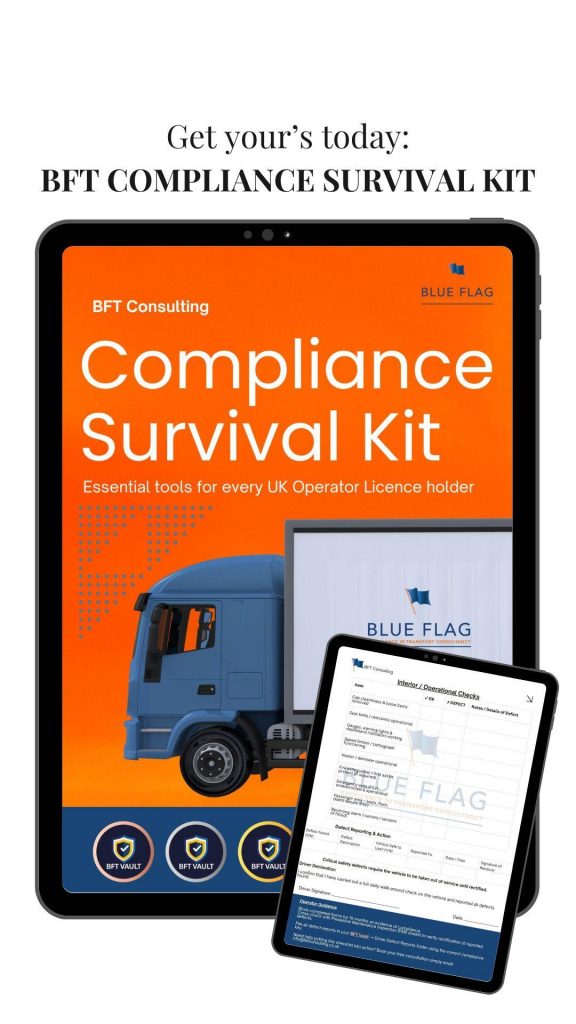
A Driver Defect Reporting System is a key part of compliance in the UK trucking transportation industry. It helps you keep vehicles safe, roadworthy, and within legal standards. Whether you are a driver or an operator, you must report defects clearly and on time.
Under the rules linked to your operator Licence, every vehicle must be checked daily. You must record faults and act on them before the vehicle goes back on the road. This is not optional. It is a legal duty tied to your vehicle operators licence.

What is a Driver Defect Reporting System
A Driver Defect Reporting System is a process used to record and fix vehicle faults. Drivers check their vehicles before and after each shift. They log any issues found, no matter how small.
These checks link directly to your vehicle operators Licence compliance. They show that you are taking steps to keep your fleet safe.
A basic system includes:
- Daily walkaround checks
- Written or digital defect reports
- Clear repair records
- Sign-off after faults are fixed
This process proves you are managing your vehicles properly under your operators Licence UK.
Why Defect Reporting Matters
Defect reporting protects you, your drivers, and other road users. It also protects your business.
If you fail to report defects, you risk:
- DVSA penalties
- Prohibition notices
- Public Inquiry hearings
- Loss or suspension of your operator Licence
For example, a driver who ignores worn tyres or faulty brakes puts everyone at risk. If DVSA stops that vehicle, the operator may face serious consequences.
A strong system helps you avoid these issues and supports your operator licence application if you are new to the industry.
Legal Requirements in the UK
The UK government requires all operators to maintain safe vehicles. This is part of the rules under the vehicle operators licence system.
You must:
- Carry out daily walkaround checks
- Record all defects
- Fix safety issues before use
- Keep records for at least 15 months
These rules apply whether you hold a full or restricted operators licence. Even small fleets must follow the same standards.
Failure to comply can affect your operators licence cost over time due to fines, legal action, or loss of business.
Key Components of an Effective System
A strong Driver Defect Reporting System is simple, clear, and easy to follow. Drivers should know exactly what to do.
Daily Vehicle Checks
Drivers must inspect the vehicle before use. This includes:
- Tyres and wheels
- Lights and indicators
- Mirrors and visibility
- Brakes and steering
- Fluid levels
These checks take around 10 to 15 minutes. They are essential for safety and compliance.
Defect Reporting Process
If a fault is found, the driver must report it immediately. The report should include:
- Date and time
- Vehicle details
- Description of the defect
- Driver name and signature
This record supports your compliance under your vehicle operators licence.
Repair and Maintenance
Once a defect is reported, action must follow. Minor issues can be scheduled for repair. Major faults must be fixed before the vehicle is used again.
Operators must ensure:
- Repairs are completed quickly
- Work is recorded
- Vehicles are safe before release
Record Keeping
All defect reports must be stored properly. DVSA may request these records during inspections.
Good record keeping shows:
- You follow safety procedures
- You manage risks
- You meet your operators Licence UK obligations
Digital vs Paper Systems
Many operators now use digital systems. These tools make reporting faster and more accurate.
Benefits of Digital Systems
- Real-time reporting
- Automatic record storage
- Easy access for audits
- Reduced paperwork
However, paper systems are still acceptable if they are clear and well managed.
The key point is consistency. Your system must work every day without fail.
Common Mistakes to Avoid
Even experienced operators make errors. These mistakes can lead to compliance issues.
Avoid:
- Skipping daily checks
- Poor record keeping
- Delayed repairs
- Lack of driver training
- Missing signatures or details
For example, if a driver reports a defect but no repair record exists, DVSA may treat it as non-compliance.
This can affect your operator licence application or lead to action against your existing licence.
Role of Drivers and Operators
Both drivers and operators share responsibility.
Driver Responsibilities
Drivers must:
- Carry out checks
- Report defects honestly
- Refuse to drive unsafe vehicles
Operator Responsibilities
Operators must:
- Provide clear systems
- Train drivers properly
- Ensure repairs are completed
- Keep accurate records
Strong teamwork ensures compliance with your vehicle operators licence.
Impact on Operator Licence
Your defect reporting system plays a direct role in your operator Licence status.
Poor systems can lead to:
- DVSA investigations
- Public Inquiry hearings
- Licence suspension or revocation
A strong system supports:
- Licence approval
- Renewal or restoration
- Long-term compliance
It also improves your chances during a pco operator licence application or other licensing processes.
How to Improve Your System
Improving your system does not require complex tools. Focus on clarity and consistency.
You can improve by:
- Training drivers regularly
- Using checklists for inspections
- Reviewing defect reports weekly
- Acting quickly on repairs
- Using digital tools where possible
For example, many operators use mobile apps for defect reporting. This reduces errors and speeds up communication.
Real-World Example
A small fleet operator in the UK faced repeated DVSA warnings due to poor defect records. Drivers completed checks, but reports were incomplete.
After working with a transport consulting service, they:
- Introduced a digital reporting system
- Trained drivers on proper checks
- Improved record keeping
Within months, their compliance improved. They passed inspections and secured their operators Licence UK without further issues.
Link to Operator Licence Compliance
A Driver Defect Reporting System is not separate from licensing. It is a core requirement.
Whether you are applying for a new operator licence application or maintaining an existing vehicle operators licence, your system must be strong.
It supports:
- Safe operations
- Legal compliance
- Business reputation
Without it, your business is at risk.
Get Expert Support
Setting up or improving a Driver Defect Reporting System can be challenging. Rules must be followed correctly, and mistakes can be costly.
If you need help with your operator Licence, compliance systems, or operator licence application, contact Blue Flag Transport Consulting.
Their team provides expert transport consulting services to help you meet DVSA requirements, improve safety, and secure your licence with confidence.