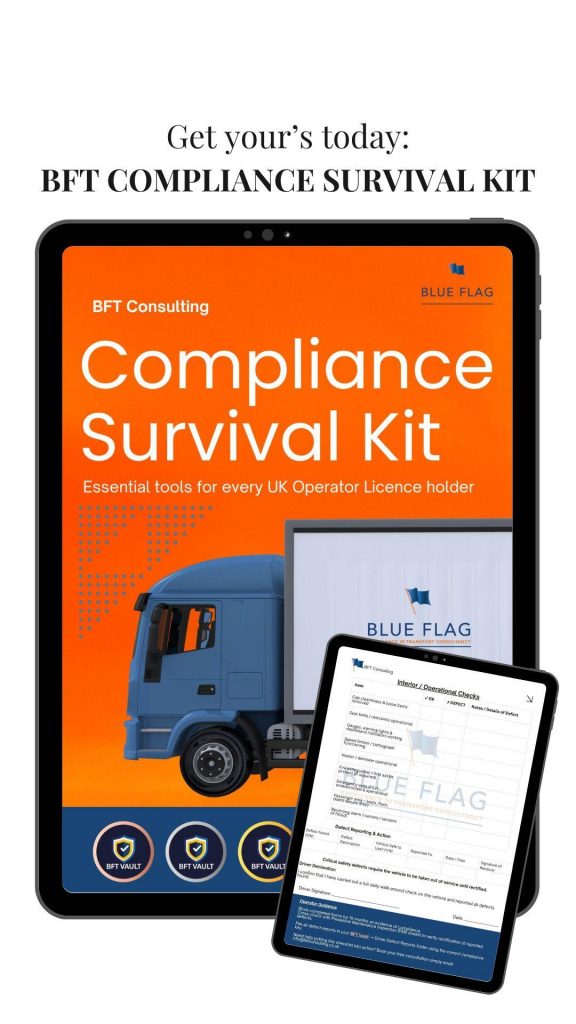
Running commercial vehicles in the UK brings more responsibility than obtaining an Operator Licence. You also need working systems that keep your vehicles safe, your drivers compliant, and your records ready for inspection.
An Operator Licence Compliance Setup Service helps you put those systems in place from the start. It is useful for new operators preparing an operator licence application, growing transport businesses, and existing operators that want to strengthen weak compliance procedures.
Good compliance is about daily control. You need clear checks, reliable records, trained staff, and regular monitoring. When these processes work together, it becomes easier to meet your licence undertakings and operate with confidence.
What Is an Operator Licence Compliance Setup Service?
A compliance setup service helps your transport business create the systems needed to manage an operator Licence correctly.
The service looks at how your business will control:
- Vehicle maintenance
- Driver defect reporting
- Drivers’ hours
- Tachographs
- Driver licences
- Driver CPC requirements
- Vehicle weights
- Safe loading
- Operating centre requirements
- Vehicle and trailer records
- Compliance documents
- Transport manager duties
- Licence changes and notifications
The aim is to create practical procedures your team can follow every day.
The Traffic Commissioner expects operators to have adequate management, monitoring, and reporting systems in place. Operators must also maintain vehicles and trailers in a safe and roadworthy condition.

Why Compliance Setup Matters
Getting a vehicle operators Licence is only the beginning.
When you make an application, you give undertakings about how your operation will be managed. Those commitments continue after the licence has been granted.
Problems often start when a business gets busy.
A new vehicle arrives. A driver joins at short notice. Inspection paperwork gets filed late. Tachograph data is not reviewed. Defects are reported but nobody confirms the repair.
Small gaps can quickly become larger compliance problems.
A structured setup gives each task an owner, a process, and a record.
Setting Up Vehicle Maintenance Systems
Vehicle maintenance is one of the most important parts of operator compliance.
Your business needs arrangements that keep vehicles and trailers fit and serviceable. If maintenance is carried out by an outside garage, you should also have clear evidence of the arrangement.
Your maintenance system should normally cover:
- Planned safety inspections
- Daily walkaround checks
- Driver defect reports
- Defect repairs
- MOT planning
- Tyre monitoring
- Brake performance
- Trailer maintenance
- Vehicle servicing
- Inspection records
- Repair records
Maintenance records for vehicles must normally be kept for at least 15 months.
Daily Walkaround Checks
Drivers should know how to carry out an effective daily check before using a vehicle.
The process should make it simple to report faults such as:
- Damaged tyres
- Faulty lights
- Windscreen damage
- Brake concerns
- Fluid leaks
- Loose bodywork
- Problems with mirrors
- Load security issues
Reporting a defect is only the first step.
Your system should also show what happened next. If a defect required repair, there should be a clear record showing the action taken before the vehicle returned to service.
Drivers’ Hours and Tachograph Compliance
Drivers’ hours are another key area of transport compliance.
Operators are responsible for making sure drivers follow the relevant rules on driving time, breaks and rest. Records also need to be collected and checked.
A strong compliance setup should include procedures for:
- Tachograph downloads
- Driver card downloads
- Drivers’ hours analysis
- Infringement reviews
- Working time monitoring
- Missing mileage checks
- Driver debriefs
- Corrective action
- Record storage
Where digital tachographs apply, GOV.UK guidance states that vehicle unit data should generally be downloaded at least every 90 days and driver smart card data at least every 28 days. Drivers’ hours records should normally be retained for at least 12 months, while working time records should normally be kept for at least 24 months.
Simply downloading data is not enough. Someone needs to review it and act when problems appear.
Driver Licence and Training Checks
Every driver operating under your licence should be legally entitled and competent to drive the vehicle assigned to them.
Your system should include regular checks covering:
- Driving licence entitlement
- Licence restrictions
- Driver CPC status where required
- Medical requirements where applicable
- Training records
- Driver induction
- Company policies
- Previous compliance concerns
Drivers should also understand their own duties.
A good induction process explains defect reporting, drivers’ hours, mobile phone rules, safe loading, vehicle security and what to do when something goes wrong.
Choosing the Correct Operator Licence
There are different types of goods vehicle operator Licence.
These include:
Restricted Operator Licence
A restricted operators licence generally allows a business to carry its own goods in connection with its trade or business.
This type of licence does not remove the need for strong compliance systems. Restricted operators still need suitable financial resources, safe vehicles, proper maintenance and systems for obeying relevant transport rules.
Standard National Licence
A standard national licence allows operators to carry their own goods and carry goods for other people for hire or reward within Great Britain, subject to the licence conditions.
Standard International Licence
A standard international licence provides wider authority for qualifying international transport operations.
Standard licence holders also need to meet requirements relating to professional competence, good repute, financial standing and transport management.
Choosing the wrong licence type during an operator licence application can create delays or operational restrictions.
Transport Manager Compliance
A standard licence normally requires a professionally competent transport manager.
The transport manager needs to continuously and effectively manage transport activities rather than simply appear as a name on the licence.
Their responsibilities often include overseeing:
- Vehicle maintenance
- Driver management
- Tachographs
- Drivers’ hours
- Driver training
- Vehicle authorisation
- Record keeping
- Compliance reviews
- Corrective action
Professional transport consulting can help operators build systems that give the transport manager accurate information and clear evidence of compliance.
Keeping Your Operator Licence Details Current
Your compliance system should also include a process for reviewing the actual licence.
Operators need to keep important details updated.
Relevant business changes generally need to be reported to the Traffic Commissioner within 28 days. These can include changes involving the legal entity, company structure, directors, correspondence address or operating centre details.
You should also monitor:
- Vehicle registrations
- Trailer authority
- Vehicle margins
- Operating centres
- Transport manager details
- Company information
- Licence conditions
- Licence undertakings
If your business needs more vehicles or trailers than currently authorised, you may need a variation rather than simply adding another vehicle.
Preparing Compliance Documents
Good documentation makes compliance easier to control and easier to prove.
A practical compliance file might include:
- Maintenance planner
- Driver defect procedure
- Driver handbook
- Tachograph procedure
- Drivers’ hours policy
- Driver licence checking procedure
- Vehicle inspection records
- Training records
- Infringement reports
- Operating centre information
- Transport manager review records
- Compliance audit records
Digital systems work well when documents are organised and staff know where information belongs.
Paper systems also work if they remain complete, secure and easy to retrieve.
The important point is consistency.
Operator Licence Costs and Financial Planning
Businesses often search for operators licence cost when planning their application.
It is important to separate licence fees from financial standing or financial resource requirements.
Financial standing is not simply another application fee. It refers to the funds that need to be available to support the safe operation and maintenance of vehicles.
The amount required depends on the type of operators Licence UK businesses hold and the number and type of vehicles authorised.
Therefore, financial planning should form part of your compliance setup rather than being treated as a one-off requirement during the application.
What About a PCO Operator Licence Application?
Some businesses search online for a pco operator licence application while researching transport licensing.
PCO and private hire licensing are separate from the goods vehicle operator licensing system covered here.
If your business runs HGVs, vans or other goods vehicles, you should identify which vehicle operators licence requirements apply to your operation rather than relying on guidance intended for taxis or private hire businesses.
Using the correct licensing route from the beginning helps prevent wasted time and incorrect applications.
Compliance Reviews and Internal Audits
A compliance system should never remain untouched after setup.
Your operation changes.
Vehicles are replaced. Drivers leave. New staff join. Contracts grow. Operating centres change.
Regular internal reviews help you find problems before they become serious.
A monthly or quarterly compliance review might examine:
- Overdue vehicle inspections
- Repeated driver defects
- Tachograph infringements
- Missing records
- Driver licence checks
- Maintenance quality
- Vehicle authorisation
- Training requirements
- Outstanding corrective actions
If a weakness appears, record the issue, decide what action is needed, give responsibility to someone, and confirm when the problem has been resolved.
This creates a clear audit trail.
Restoring Compliance After Problems
Some operators seek help after a period of poor record keeping or management change.
In these situations, the priority should be restoration of proper controls.
A structured renewal of compliance systems might involve reviewing old records, correcting procedures, retraining drivers and introducing stronger monitoring.
Where a licence has faced regulatory problems, reinstatement or reactivation may involve different legal and regulatory steps depending on what happened to the licence.
Do not assume that business operations can restart simply because internal procedures have improved. Your authority to operate must be valid before vehicles are used.
Get Help With Your Operator Licence Compliance Setup
Blue Flag Transport Consulting helps transport businesses prepare for their Operator Licence responsibilities with practical compliance support.
Whether you are starting an operator licence application, reviewing an existing restricted operators licence, setting up a standard vehicle operators licence, or strengthening an established transport operation, having the correct systems from the beginning makes compliance easier to manage.
Contact Blue Flag Transport Consulting for support with your Operator Licence, compliance setup, transport manager requirements and ongoing transport consulting.
Build your systems before problems develop, keep your records organised, and make compliance part of your normal daily operation.